

In the vast and wondrous world of plants, there exists a unique group that has captivated the imagination of botanists and enthusiasts alike for centuries. These plants have evolved to thrive in environments where nutrients are scarce, developing extraordinary adaptations that enable them to capture and digest insects to supplement their nutrient intake. Welcome to the fascinating realm of carnivorous plants, where we'll delve into the intriguing world of Venus flytraps.
What Are Carnivorous Plants?
Carnivorous plants belong to a group of plant species that obtain essential nutrients by capturing and digesting small animals, typically insects. These plants have evolved to live in environments with poor soil quality, such as bogs, swamps, and other areas where the soil lacks necessary nutrients like nitrogen, phosphorus, and potassium. To compensate for this lack, carnivorous plants have developed unique mechanisms to capture prey, which they then digest using enzymes to obtain the required nutrients.

To understand what makes a plant carnivorous, it's essential to grasp the concept of nutrient-poor environments. These areas are characterized by acidic soils with limited nutrient availability, making it challenging for plants to absorb necessary nutrients through traditional means like root absorption. In such conditions, plants must rely on alternative methods to obtain the required nutrients.
The Anatomy of a Carnivorous Plant
Carnivorous plants have distinct features that enable them to capture and digest prey. Some key characteristics include:
Modified leaves or tentacles that serve as triggers for capturing insects
Sticky substances or glue-like secretions on the leaves or tentacles to trap prey
Digestive enzymes in the plant's tissues that break down the insect's body into a nutrient-rich soup
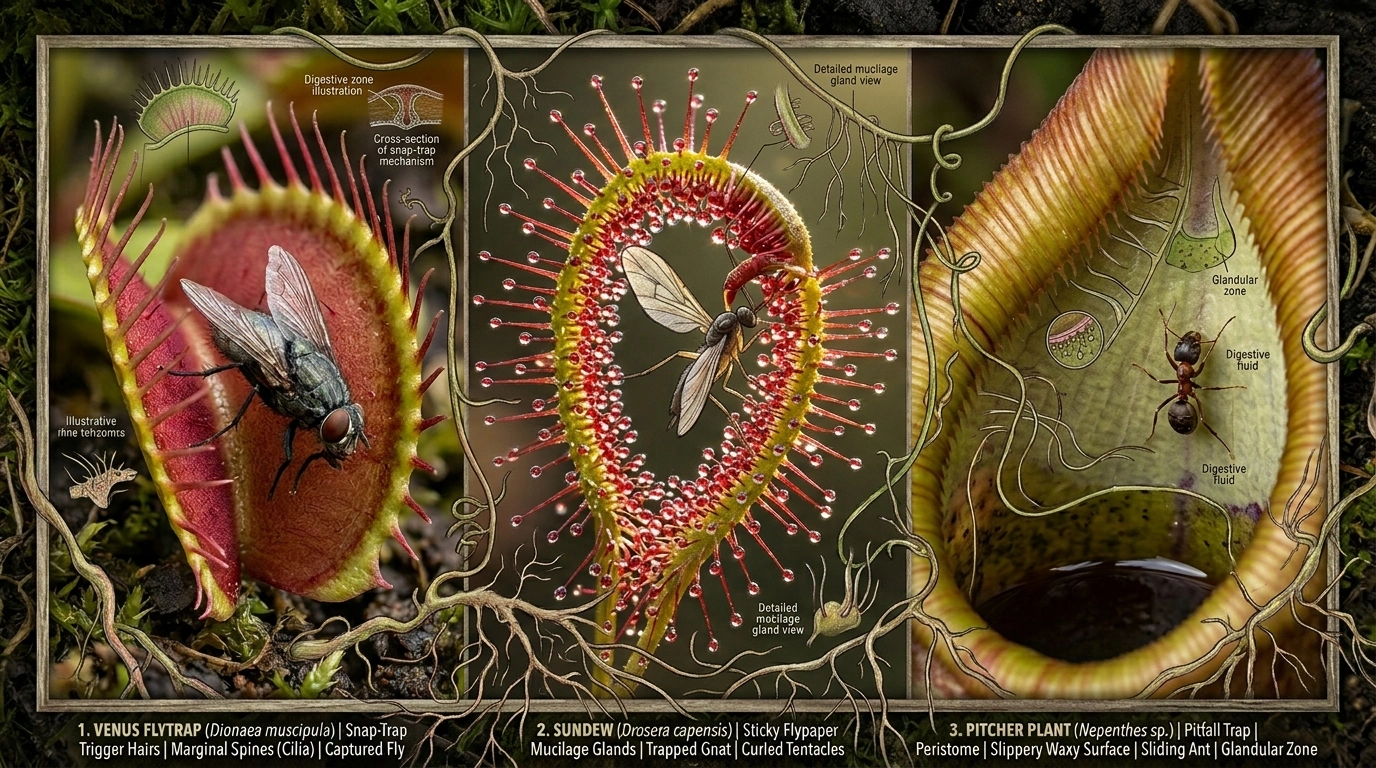
It's essential to note that carnivorous plants have evolved these adaptations over time, often in response to environmental pressures. For example, the Venus flytrap's unique trigger mechanism is thought to have developed as a result of its native habitat's high insect population.
How Do Carnivorous Plants Catch Prey?
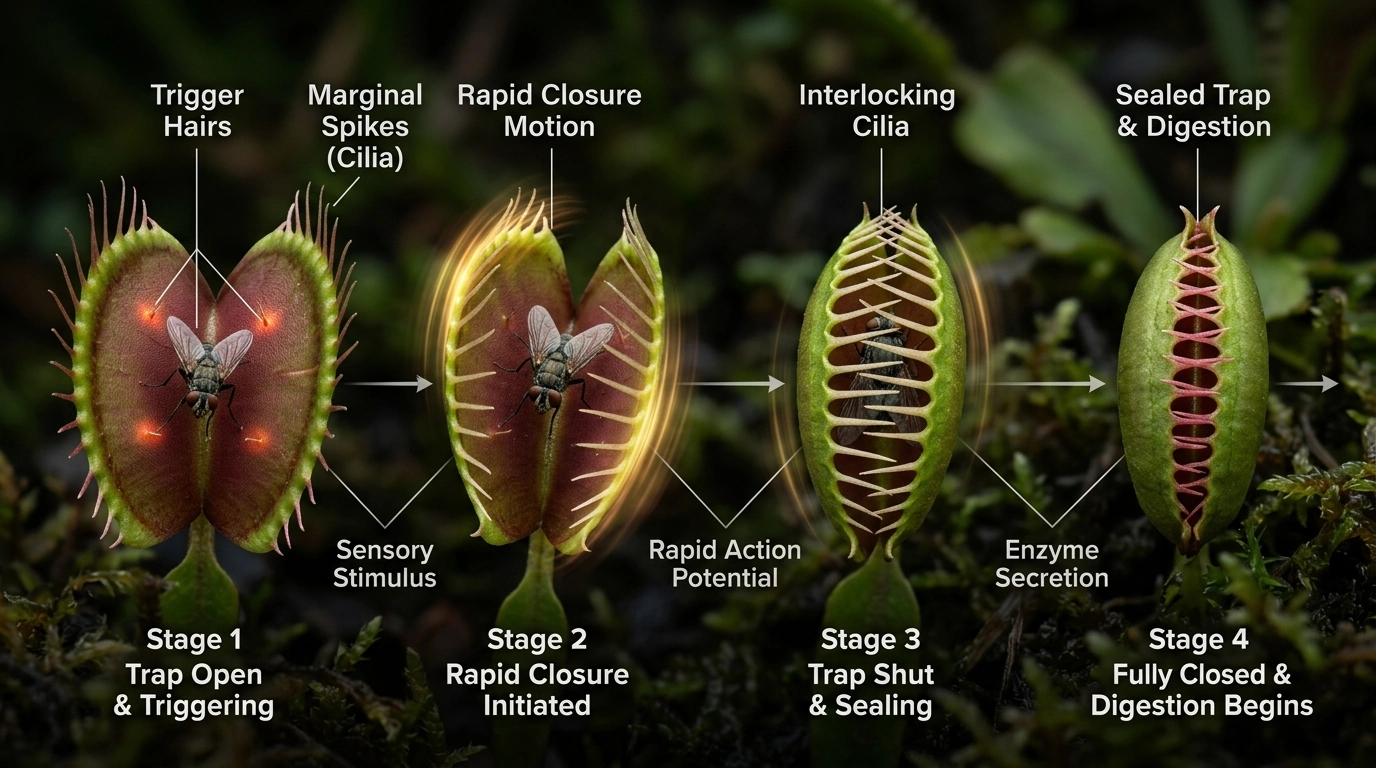
The Venus flytrap (Dionaea muscipula) is one of the most well-known carnivorous plants, and its unique mechanism for capturing prey has fascinated scientists and botanists for centuries. When an insect lands on the trigger hairs of a Venus flytrap's leaves, the plant rapidly snaps shut, trapping the insect inside. The plant then secretes digestive enzymes to break down the insect's body, releasing essential nutrients like nitrogen, phosphorus, and potassium.
This process is often referred to as "snap trap" mechanism. When an insect lands on the trigger hairs, it sends a signal to the plant, causing it to snap shut within milliseconds. This rapid movement ensures that the insect is trapped inside the leaf, allowing the plant to digest its prey.
Types of Carnivorous Plants
While the Venus flytrap is perhaps the most iconic carnivorous plant, there are many others that have evolved unique adaptations for capturing prey. Some examples include:
Pitcher plants (Nepenthes spp.), which use a slippery surface to lure insects into a digestive chamber
Sundews (Drosera spp.), which secrete sticky glue-like substances on their leaves to trap insects
Bladderworts (Utricularia spp.), which capture small organisms using bladder-like structures that expand to suck in prey
These examples illustrate the diversity of carnivorous plants and their various strategies for capturing prey. Each plant has evolved unique adaptations that enable it to thrive in its native environment.
Growing Carnivorous Plants at Home
While carnivorous plants are often associated with tropical and subtropical regions, it is possible to grow them in your own home. To succeed, you'll need to replicate the plant's native environment by providing:
High humidity levels (typically above 50%)
Bright, indirect light
Low-nutrient soil or a specialized carnivorous plant potting mix
Regular watering with distilled or rainwater
When choosing a location for your carnivorous plant, consider the temperature and humidity requirements. Most carnivorous plants prefer bright, indirect light, but some species can tolerate direct sunlight.
Caring for Your Carnivorous Plant
To keep your carnivorous plant thriving, follow these tips:
Water sparingly, as overwatering can lead to root rot and other problems
Fertilize sparingly, using a balanced fertilizer specifically designed for carnivorous plants
Provide regular maintenance, such as pruning dead leaves or repotting the plant in fresh soil
It's essential to note that carnivorous plants have specific watering requirements. They prefer distilled or rainwater, which is free from minerals and other impurities that can harm the plant.
Conclusion
Carnivorous plants are a testament to the incredible diversity of life on Earth. By understanding their unique adaptations and environments, we can deepen our appreciation for these fascinating organisms. Whether you're a seasoned botanist or simply an enthusiast, learning about carnivorous plants will inspire you to explore the intricate web of life that surrounds us.
By growing your own carnivorous plant at home, you'll not only experience the thrill of nurturing a unique and fascinating species but also develop a deeper connection with the natural world. As we continue to learn more about these incredible organisms, we may uncover new insights into the evolution of plants and their relationships with their environments.
As we conclude our exploration of carnivorous plants, remember that these remarkable organisms have evolved over time to thrive in challenging environments. By understanding and appreciating their unique adaptations, we can gain a deeper appreciation for the natural world and its incredible diversity.
This Article was made with AI assistance and human editing.