

SaaS Domain Name Ideas: How Successful Startups Build Memorable Brands in 2026
Most founders spend months building products and only a few hours choosing a name. Ironically, the name often becomes the first impression customers remember. Long before someone experiences your software, they experience your brand.
Some of the world's most recognizable software companies never relied on keyword-heavy names. Slack isn't called TeamMessagingPlatform.com. Stripe didn't become PaymentsSoftwareForBusiness.com. Notion didn't launch as ProductivityWorkspaceSuite.com. Instead, these companies chose names that were easy to remember, simple to pronounce, and capable of growing beyond their original products.
That is why searching for SaaS domain name ideas isn't really about finding a random available domain. It's about creating an identity that customers trust, investors remember, and competitors struggle to imitate.
In 2026, AI startups, indie hackers, and software founders are moving away from exact-match keywords and focusing more on brandability, emotional impact, and scalability. The most successful brands are built around names that feel timeless rather than trendy.
This guide explores the psychology behind memorable SaaS brands, the characteristics shared by successful companies, and the frameworks founders can use to generate unlimited startup domain name ideas.
What Makes a Great SaaS Domain Name?
A great domain name does far more than describe a product. It creates trust, sparks curiosity, and makes people remember you after hearing your name once.
The best SaaS domain names usually share five characteristics:
Easy to pronounce.
Short and memorable.
Visually clean.
Scalable beyond one feature.
Emotionally distinctive.
Many founders assume that including keywords improves branding. In reality, overly descriptive names often become limiting. Imagine if Stripe had called itself OnlinePaymentProcessingSoftware.com. Such names may help explain the product initially, but they rarely become iconic brands.
Modern software companies prioritize identity over description. Customers associate trust with recognizable brands, not long keyword combinations.
Pronounceability Matters More Than People Think
People remember names they can easily say. If users hesitate while pronouncing your brand, referrals become harder. Word-of-mouth marketing depends heavily on simplicity.
Consider some successful examples:
Slack
Stripe
Notion
Figma
Linear
Cursor
Lovable
Each name is simple, conversational, and easy to spell after hearing it once.
Memorability Beats Keywords
Brand recall creates lasting value. People remember unusual names because they trigger curiosity. Names like Perplexity or ElevenLabs don't explain everything immediately, yet they become recognizable because they stand out.
A memorable name reduces customer acquisition costs over time. Instead of repeatedly explaining your brand, customers begin remembering it naturally.
Scalability Protects Future Growth
One of the biggest mistakes founders make is naming a company after its first feature.
Successful startups evolve. Products expand. New markets appear. A name that feels too narrow today can become a burden tomorrow.
Notion started as a note-taking tool. Today it powers documentation, wikis, AI workflows, project management, and collaboration. The name never restricted growth.
Similarly, Stripe grew from payment processing into financial infrastructure. Because its name wasn't tied to a single product category, expansion felt natural.
The Psychology Behind Memorable SaaS Brands

Human brains are wired to remember patterns, sounds, and emotions. Branding psychology explains why certain startup names become unforgettable while others disappear.
Simplicity Creates Trust
People unconsciously trust things they understand quickly. Cognitive fluency—the ease with which information is processed—plays a huge role in branding.
Simple names feel familiar, and familiar things feel trustworthy.
This is one reason companies like Slack, Stripe, and Figma gained traction. Their names require almost no mental effort.
Curiosity Increases Recall
Names that trigger curiosity often stay in memory longer.
Perplexity is a perfect example. The word itself sparks questions. It sounds intelligent and slightly mysterious. That emotional reaction increases memorability.
Similarly, ElevenLabs creates intrigue. Why eleven? Why labs? The unanswered questions make the brand interesting.
Sound Symbolism Influences Perception
Certain sounds subconsciously communicate speed, intelligence, or reliability.
Short names with hard consonants often feel stronger and more premium. That explains why Stripe, Slack, and Cursor sound confident and modern.
Softer names like Lovable feel friendly and approachable.
Great branding is rarely accidental. Sound itself influences emotional perception.
Why Successful SaaS Brands Avoid Keyword-Heavy Names
Early internet companies often chased SEO by stuffing keywords into domains. In 2026, successful founders think differently.
Brand equity matters more than exact-match domains.
Search engines have become sophisticated enough to reward authority and quality content rather than keyword-stuffed brands.
Customers also trust real brands more than generic names.
Compare these examples:
Stripe vs BestPaymentSoftware.com
Notion vs ProductivityWorkspaceTool.com
Figma vs DesignCollaborationPlatform.com
Linear vs ProjectManagementAppOnline.com
The difference is obvious. Strong brands create emotional attachment. Generic names simply describe products.
Brandability compounds over time.
Lessons From Modern SaaS Success Stories
OpenAI
The name combines accessibility with ambition. It communicates openness and artificial intelligence without locking the company into one specific product.
Notion
A single word with broad meaning. It allows expansion into countless categories without losing identity.
Slack
Short, playful, and highly memorable. Easy to say, impossible to forget.
Stripe
Minimalistic and premium. The name carries motion and energy while remaining flexible.
Airtable
Combines familiarity with originality. Users instantly understand that it involves data, yet the name remains distinctive.
Figma
Unique and visually appealing. The name became synonymous with modern design workflows.
Linear
Simple, elegant, and aligned with the product's philosophy of speed and clarity.
Perplexity
Intellectual and curiosity-driven. The name immediately sparks attention.
Cursor
A familiar word transformed into a modern AI coding brand.
Lovable
Emotion-driven branding. Friendly, human, and approachable.
Replit
Compact and developer-centric. Easy to remember and highly scalable.
ElevenLabs
One of the most recognizable AI brands of the decade. Mysterious yet memorable.
The common thread among all these companies isn't keywords. It's psychology.
Great brands become assets. Products evolve, markets shift, and technology changes—but memorable names compound in value year after year.
That is why choosing a domain is one of the most important decisions founders make. Before spending months building features, securing a strong domain early can prevent expensive rebranding later. Tools like Namecheap Domains make it easy to check availability, explore alternatives, and secure brand names while they're still available. Their Beast Mode search is particularly useful for founders brainstorming multiple variations and extensions.
In the next section, we'll explore the biggest SaaS naming trends shaping 2026 and why AI startups are embracing entirely new branding philosophies.
SaaS Naming Trends in 2026

The startup naming landscape has changed dramatically over the last decade. In the early days of the internet, founders obsessed over exact-match keywords. A domain like OnlineCRMSoftware.com or BestProjectManagementTool.com might have sounded attractive because it described the product and offered perceived SEO advantages.
In 2026, however, branding has become far more important than keywords. AI companies, developer tools, productivity platforms, and B2B startups are increasingly choosing names that feel distinctive, emotional, and flexible.
The goal is no longer to describe what a company does in the domain itself. The goal is to build a brand people remember.
This shift explains why modern startups sound fundamentally different from companies launched twenty years ago.
Single-Word Brands Continue to Dominate
Single-word names have become the gold standard for premium SaaS companies.
Examples include:
Notion
Figma
Slack
Stripe
Linear
Cursor
Perplexity
Lovable
These names don't explain everything immediately. Instead, they create identity.
Single-word brands feel cleaner, easier to remember, and significantly more scalable than descriptive domains.
Investors also tend to favor companies with strong brand potential because memorable names compound over time.
AI Companies Are Embracing Human-Sounding Brands
One surprising trend among AI startups is the move away from robotic naming conventions.
During the early AI boom, many companies added words like GPT, AI, Neural, Bot, or Intelligence directly into their names.
By 2026, founders increasingly prefer names that feel human.
Companies such as Cursor, Lovable, and Perplexity demonstrate this trend perfectly. Their names evoke emotion and curiosity instead of technical jargon.
This shift reflects a broader movement toward making AI products feel approachable rather than intimidating.
Shorter Names Win Attention
Modern attention spans are short. Every extra syllable creates friction.
Names with one or two words and fewer than ten letters often perform better because they are easier to pronounce, easier to remember, and easier to type.
Compare:
Stripe
Figma
Linear
Slack
Cursor
Against:
AdvancedBusinessAutomationPlatform
CustomerRelationshipManagementSuite
The difference is obvious.
Simplicity scales.
Real Words Are Back
Many startups spent years inventing unusual spellings or replacing vowels with numbers.
That trend is fading.
Founders are rediscovering the power of recognizable words because they improve trust and memorability.
Names like Linear, Cursor, and Lovable prove that ordinary language can become extraordinary brands when paired with exceptional products.
Brandability vs SEO Keywords
One of the biggest questions founders ask is whether they should prioritize keywords or branding.
The answer has become increasingly clear.
Brand wins.
Search engines have evolved beyond exact-match domains. Content quality, authority, backlinks, and user experience matter far more than stuffing keywords into a URL.
A memorable brand creates advantages that keyword domains simply cannot replicate.
Why Keyword Domains Often Age Poorly
Keyword-heavy domains can become liabilities.
Imagine if Stripe had launched as PaymentProcessorSoftware.com.
The name would have restricted future expansion into banking infrastructure, financial APIs, and enterprise products.
Similarly, Notion would have struggled to evolve beyond note-taking if it had chosen a highly descriptive domain.
Strong brands create freedom.
Brand Equity Compounds
People remember names, not keywords.
Over time, brand recognition lowers customer acquisition costs because referrals increase naturally.
Users tell friends about Slack, not TeamCommunicationSoftware.com.
Developers discuss Cursor, not AICodingAssistantPlatform.com.
Brands become shortcuts for trust.
SEO Comes From Content, Not Domains
Modern search rankings depend more on expertise and authority than domain names.
Companies with strong content strategies can rank extremely well regardless of whether their brand includes keywords.
This explains why companies with abstract names dominate search results across multiple industries.
Short vs Descriptive Domain Names
Choosing between a short brand name and a descriptive name is one of the most important decisions founders face.
Both approaches have advantages, but history strongly favors short brands.
Benefits of Short Names
Easy to remember.
Easy to pronounce.
Look better in logos.
Scale across industries.
Feel premium.
Improve word-of-mouth marketing.
Examples include:
Stripe
Figma
Slack
Linear
Cursor
Benefits of Descriptive Names
Communicate the product immediately.
Require less explanation initially.
Useful for niche products.
However, descriptive domains often limit growth.
Most iconic technology companies eventually evolve beyond their original products.
That is why founders increasingly prioritize brandability over perfect descriptions.
AI SaaS Domain Name Ideas

AI startups represent one of the fastest-growing categories in software. Naming trends within AI emphasize trust, creativity, and human connection.
Instead of copying generic AI patterns, founders are creating names that feel emotional and memorable.
Human-Centered AI SaaS Names
Brightly
Clario
Lumora
Kindred
Elevate
Originly
Velora
Mentora
Insightly
Beacon
Developer AI Startup Names
CodePilot
StackFlow
PromptForge
Bytepath
SyntaxLab
Devloom
CodeMesh
FlowGrid
CompileX
LaunchNode
Creative AI Brand Ideas
EchoMind
NovaFlow
PulseAI
Skybound
Omnify
Sparkwave
Orbital
Zenora
Auralis
Visionary
Before falling in love with any name, checking domain availability early is critical. Premium names disappear quickly, and waiting can turn a simple purchase into a five-figure acquisition later.
Many founders use Namecheap Domains during the brainstorming phase because its Beast Mode search allows bulk exploration of alternatives, .com domains, .io domains, .ai domains, and creative combinations without slowing down the naming process.
B2B SaaS Domain Name Ideas
B2B software brands often benefit from names that sound professional, reliable, and scalable.
The best software company domain names balance trust with originality.
Professional B2B SaaS Names
ClarityHQ
Syncora
Flowbridge
GridPoint
TaskForge
Scalepath
Corelytics
AxisFlow
Elevora
NorthGrid
Enterprise SaaS Names
VectorOps
AtlasCore
DataSphere
NexScale
PrimeStack
CloudForge
OpsBridge
LogicGrid
InsightCore
VertexFlow
Whether you're launching an AI platform, productivity app, or enterprise software company, remember that names should support long-term growth.
The best startup domain name ideas are rarely the most descriptive.
They're the ones customers remember years later.
Next, we'll explore domain extensions, productivity SaaS names, finance startup naming ideas, and why .com still dominates trust in 2026.
Productivity SaaS Domain Name Ideas
Productivity software remains one of the largest and most competitive categories in SaaS. From note-taking and project management to AI-powered personal assistants, the market continues to expand in 2026. Successful brands in this space often feel calm, efficient, and intuitive.
Names that communicate clarity and flow tend to resonate because productivity itself is an emotional promise. Users are buying focus, simplicity, and organization rather than features.
Productivity SaaS Naming Ideas
FlowDesk
Focusly
Syncora
Mindlane
TaskPilot
Clario
ZenFlow
OrbitDesk
Planora
ElevateHQ
ClearPath
Workloom
TaskGrid
NorthFlow
Momentum
Many successful productivity startups prioritize names that evoke movement and clarity. Linear is a great example. The name communicates speed and simplicity without explicitly describing project management.
Finance SaaS Domain Ideas
Trust matters more in finance than almost any other industry. Fintech brands must feel secure, professional, and scalable.
Stripe succeeded partly because its name feels modern and premium. Financial brands with overly complex names often struggle to establish trust.
Fintech and Finance SaaS Name Ideas
Vaultly
LedgerFlow
CapitalGrid
PayAxis
Fundora
Finora
ScalePay
TrustBridge
AssetPilot
PrimeLedger
FlowCapital
AtlasPay
NorthFund
NexFinance
ClearLedger
Strong financial brands balance innovation with reliability. Short names generally outperform technical descriptions because they inspire confidence and feel more established.
Marketing SaaS Domain Names
Marketing platforms benefit from energetic and creative branding. Names that imply growth, visibility, and momentum often perform well.
Marketing Startup Domain Name Ideas
GrowthPilot
ReachFlow
AmplifyHQ
SignalBoost
MarketRise
Brandora
LaunchGrid
SparkScale
ClickOrbit
TrafficNest
LeadBridge
ScaleWave
Convertly
RankPilot
GrowthForge
Modern marketing brands emphasize momentum and optimism because customers want growth, not software features.
Domain Extensions Explained (.com vs .io vs .ai)
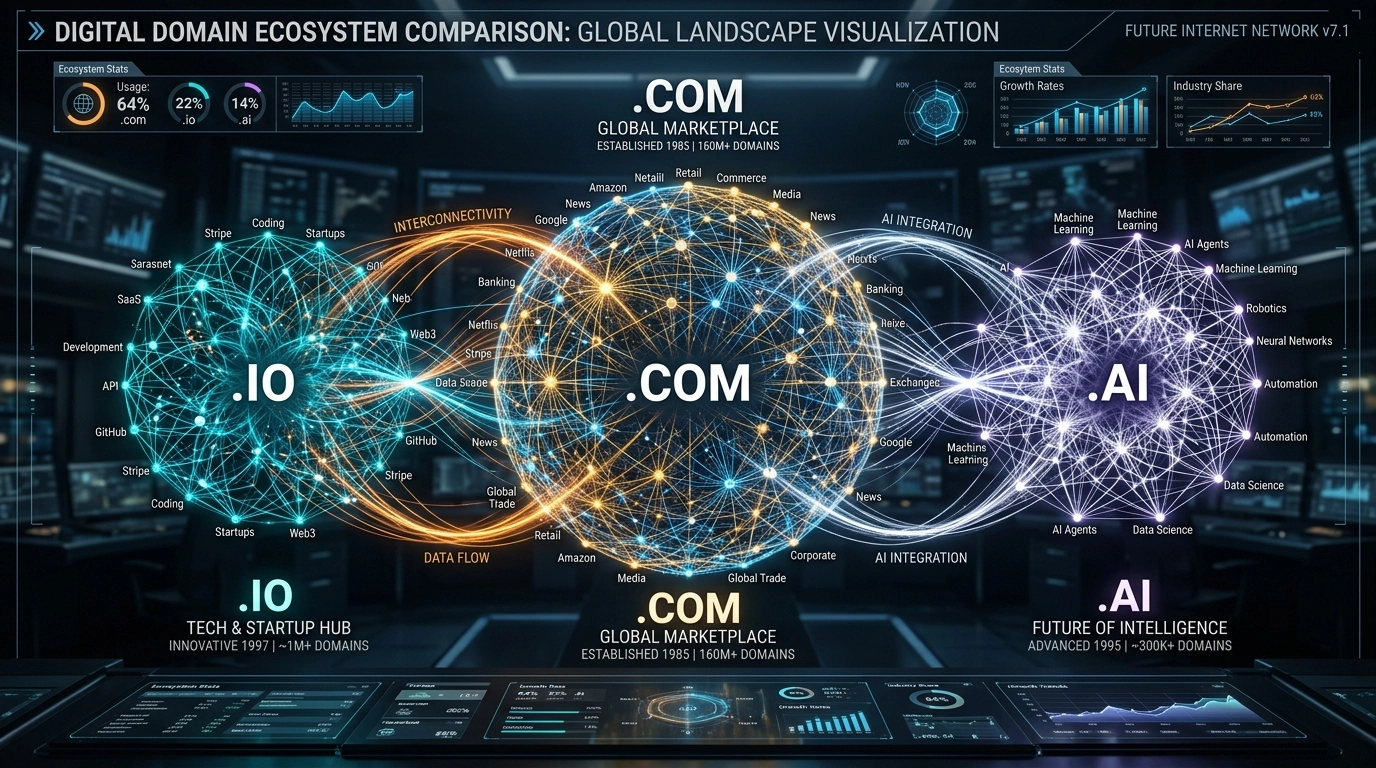
Choosing the right extension has become almost as important as choosing the name itself. Different extensions communicate different things.
.com Domains
.com remains the king of trust. Customers instinctively assume businesses operate on .com domains. Investors prefer them, users remember them, and brand recognition is stronger.
If your dream .com is available, securing it should almost always be the first choice.
.io Domains
.io domains became popular among developers and technology startups. Companies such as early-stage SaaS businesses embraced .io because many premium .com domains were unavailable.
.io communicates innovation and startup culture. However, it lacks the universal trust of .com.
.ai Domains
The rise of artificial intelligence transformed .ai into one of the hottest domain extensions in the world.
AI startups increasingly adopt .ai because it instantly communicates category positioning.
Companies building AI copilots, coding assistants, research tools, and voice technologies frequently choose .ai when the matching .com is unavailable or prohibitively expensive.
.dev Domains
Developer tools and engineering products often favor .dev because the extension appeals directly to programmers and technical audiences.
.co Domains
.co domains offer an attractive alternative when .com is unavailable. Many startups use them during early stages before acquiring the .com later.
Why .com Still Dominates Trust
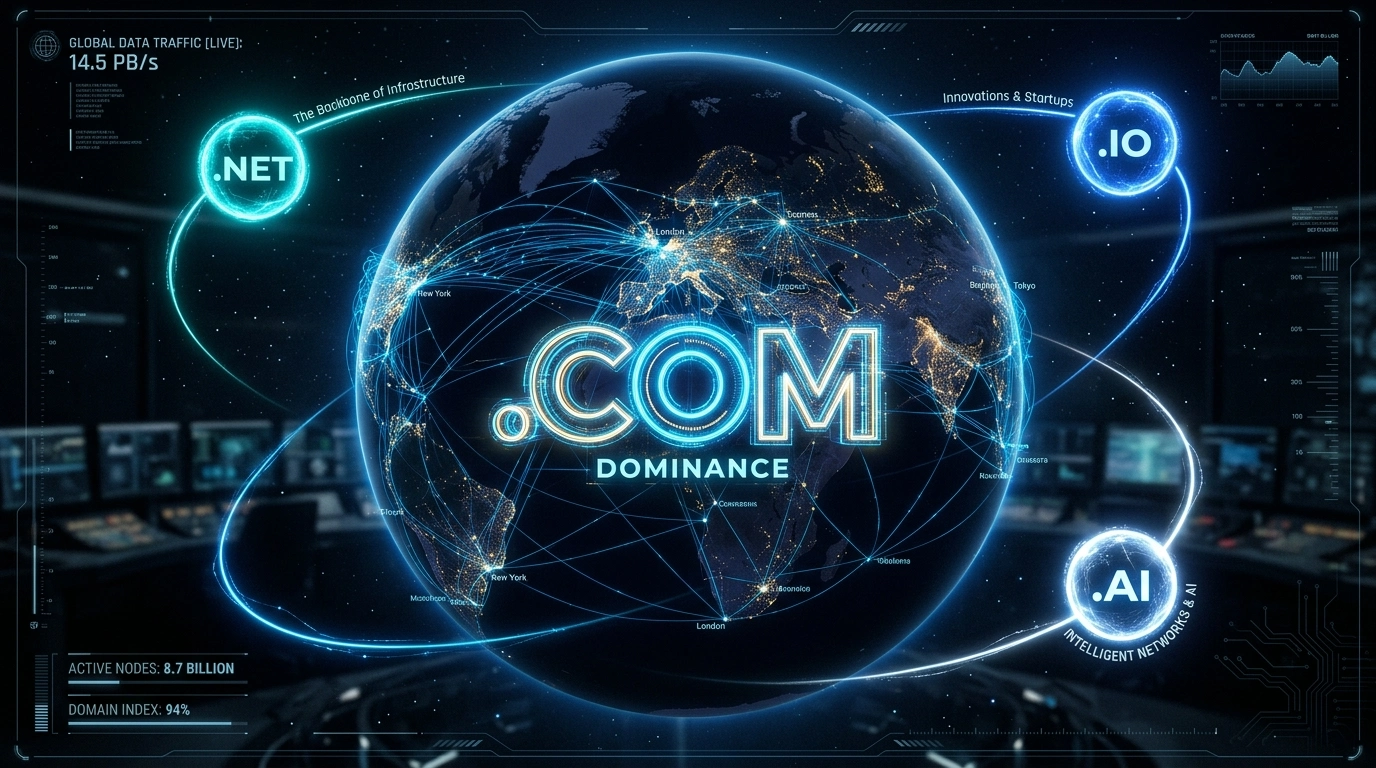
Despite the popularity of .io and .ai, .com remains the gold standard.
Consumer psychology plays a major role. People naturally type .com. Media outlets assume .com. Investors value .com. Customers trust .com.
While alternative extensions can work exceptionally well, .com continues to outperform in memorability and credibility.
Some founders launch on .io or .ai and later acquire the matching .com as their companies grow. This strategy allows startups to build momentum without delaying product launches.
Fortunately, finding available domains has become easier thanks to modern search tools. Many founders use Namecheap Domains to compare .com, .io, .ai, .dev, and other extensions while brainstorming. Competitive pricing, free lifetime Whois privacy, and Beast Mode search make it easier to secure brand names before someone else does.
The biggest mistake isn't choosing the wrong extension. It's waiting too long and losing the perfect domain to another company.
Next, we'll explore the naming mistakes founders regret, the exact framework successful startups use to generate unlimited brand ideas, and why securing domains early can save thousands of dollars in the future.
Mistakes Founders Make When Choosing Domains

Ask experienced entrepreneurs about their biggest branding regrets, and many will mention domain names.
Choosing a name seems simple in the early days. But once customers, investors, SEO rankings, and brand recognition enter the picture, changing domains becomes expensive.
Rebranding isn't just about buying another domain. It means rebuilding trust, migrating content, updating legal documents, changing social handles, and retraining customers.
Most founders who have gone through the process say the same thing:
I wish we had secured the right name from the beginning.
Mistake #1: Thinking Too Short-Term
Many startups choose names based entirely on their first feature.
This creates problems later.
A note-taking app might evolve into an AI workspace. A payment tool may become a financial platform. A developer utility could expand into infrastructure products.
Successful brands think years ahead.
Notion, Stripe, and OpenAI all benefited from names flexible enough to support future expansion.
Mistake #2: Overusing Keywords
Founders sometimes assume SEO requires keywords inside the domain.
That approach worked fifteen years ago. Today, authority and content matter far more.
Names like Slack, Figma, and Linear prove that memorable brands outperform generic descriptions over time.
Customers recommend brands, not keywords.
Mistake #3: Choosing Difficult Spellings
If customers constantly ask how to spell your company name, referrals become harder.
Complex spellings increase friction.
The best brands are easy to say and easy to type.
Simple names scale better because they spread naturally through conversations and social media.
Mistake #4: Following Trends Too Closely
Every few years, startup naming trends change.
Adding words like Crypto, AI, Bot, Web3, or GPT may feel smart today, but trends fade.
Timeless names outlive technology cycles.
Great brands feel relevant even a decade later.
Mistake #5: Waiting Too Long
Perhaps the most expensive mistake is waiting.
Premium domains disappear every day.
A name that costs ten dollars today may cost ten thousand dollars later.
Some startups spend more acquiring domains after launch than they spent building their MVP.
Step-by-Step Framework for Creating Your Own SaaS Name
You don't need a domain name generator to discover great startup names. Most successful founders follow surprisingly similar frameworks.
Step 1: Start With Emotions, Not Features
Think about the transformation your product creates.
Speed
Clarity
Creativity
Trust
Growth
Simplicity
Intelligence
These emotions often lead to stronger brands than feature descriptions.
Step 2: Explore Real Words
Many modern brands use ordinary words in unexpected ways.
Examples include:
Cursor
Linear
Stripe
Slack
Notion
Real words improve memorability and trust.
Step 3: Combine Concepts
Pair two ideas together.
For example:
Flow + Grid = FlowGrid
Scale + Wave = ScaleWave
Cloud + Forge = CloudForge
Signal + Bridge = SignalBridge
This method creates unique and scalable names.
Step 4: Test Pronunciation
If friends cannot spell your name after hearing it once, keep brainstorming.
Pronounceability directly impacts word-of-mouth growth.
Step 5: Visualize the Brand
Imagine:
A logo.
A YouTube thumbnail.
A podcast mention.
A billboard.
An App Store listing.
Strong names feel natural everywhere.
Step 6: Check Domain Availability Immediately
Never become emotionally attached before checking availability.
Many founders create lists of fifty or even one hundred ideas before narrowing them down.
Using a platform like Namecheap Domains makes this process faster. Beast Mode search is particularly useful because it helps founders evaluate multiple variations and extensions simultaneously.
Future-Proofing Domains
Technology changes faster than brands.
Products pivot.
Markets evolve.
Entire industries emerge unexpectedly.
Your domain should be able to grow alongside your company.
Avoid Category Traps
Don't lock yourself into one product category.
Think like Amazon.
The name no longer describes books.
Think like Apple.
The name doesn't limit the company to computers.
Think like Stripe.
The name supports expansion into banking infrastructure and financial services.
The best startup domains grow with ambition.
Protect Your Brand
Many founders register:
The .com domain.
Alternative extensions.
Common misspellings.
Matching social handles.
This prevents competitors and domain investors from creating confusion later.
How to Check Domain Availability

Once you have a shortlist, act quickly.
Availability changes constantly.
Create a list of at least fifty ideas.
Prioritize brandability over exact keywords.
Check .com first.
Explore .io and .ai alternatives if needed.
Secure matching social handles.
Register important variations.
Many founders prefer Namecheap Domains because the platform combines competitive pricing, simple setup, free lifetime Whois privacy, and fast search tools. Beast Mode search is particularly valuable for startups because it speeds up brainstorming and uncovers alternative extensions before competitors do.
You can check availability here:
Why Founders Should Secure Domains Early
Every year, entrepreneurs lose premium names because they assume they'll buy them later.
Later often becomes expensive.
Some domains sell for thousands of dollars. Others disappear permanently into inactive portfolios.
Buying early creates optionality.
Even if your product changes direction, owning strong domains gives you flexibility.
Great founders understand that domains are assets, not expenses.
The cost of registering a domain is tiny compared with the cost of rebranding after customers, backlinks, and authority have accumulated.
In the next section, we'll answer the most common questions founders ask about SaaS naming and summarize the principles behind building brands that people remember for decades.
Frequently Asked Questions
What are the best SaaS domain names?
The best SaaS domain names are short, memorable, easy to pronounce, and flexible enough to support future growth. Companies like Notion, Stripe, Slack, Figma, Cursor, and Linear demonstrate that brandability often matters more than exact keywords.
Should I choose a .com domain?
Yes, whenever possible. .com remains the most trusted extension in 2026. Customers naturally associate .com with established businesses. If the exact .com isn't available, .io and .ai can be excellent alternatives for startups and AI companies.
Are keyword-rich domains still important for SEO?
Not nearly as much as they once were. Search engines prioritize authority, expertise, content quality, backlinks, and user experience. Strong brands frequently outperform keyword-heavy domains over the long term.
How long should a SaaS domain name be?
Most successful startup names contain one or two words and fewer than fifteen characters. Shorter names are easier to remember and work better across logos, social media, podcasts, and advertising.
Should I buy multiple domain extensions?
Many founders secure the .com version along with .io, .ai, and common misspellings to protect their brands. This strategy prevents confusion and reduces the risk of competitors acquiring similar domains.
How can I check domain availability?
Create a shortlist of names and check availability immediately. Premium names disappear quickly. Platforms like Namecheap Domains simplify the process with competitive pricing, free lifetime Whois privacy, and Beast Mode search that helps founders discover alternatives and secure domains before they are gone.
Check availability here:
The Biggest Lesson From Modern SaaS Brands
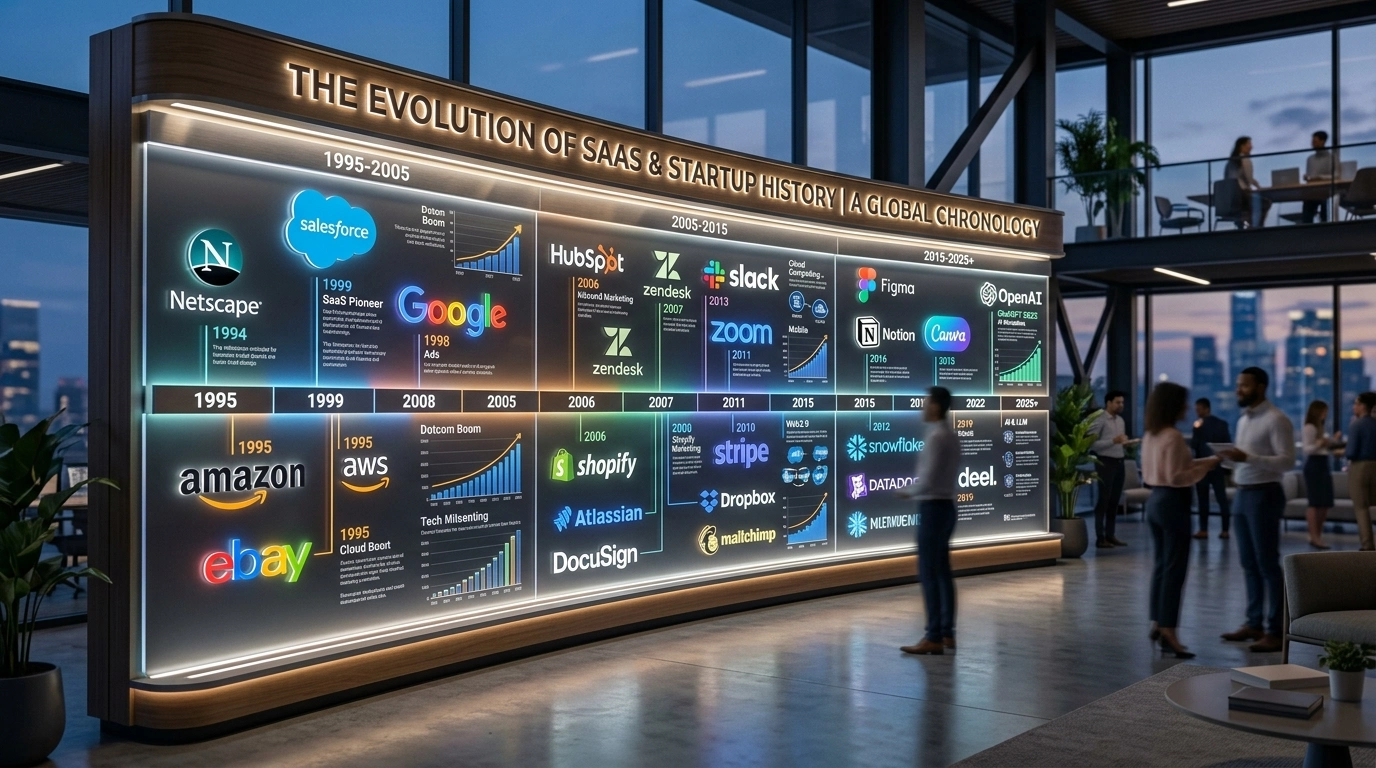
When people study companies like OpenAI, Notion, Stripe, Slack, Airtable, Figma, Linear, Perplexity, Cursor, Lovable, Replit, and ElevenLabs, they often focus on products.
But great products and great brands are deeply connected.
These companies didn't build memorable names by accident.
Their brands share common principles:
Simplicity.
Pronounceability.
Emotional resonance.
Scalability.
Curiosity.
Distinctiveness.
None of them relied on awkward keyword stuffing.
None of them optimized for short-term SEO tricks.
Instead, they created identities that people remember.
That's the real goal.
Your domain isn't just a URL.
It's the foundation of your brand.
It's what customers type into browsers, investors see in pitch decks, and users recommend to friends.
The right name compounds in value year after year.
The wrong name becomes a limitation.
Final Thoughts: Buy Time, Not Just Domains
Most founders underestimate how quickly great domains disappear.
They assume they'll decide later.
But later often means paying thousands of dollars or settling for a weaker brand.
Registering domains early isn't about spending money.
It's about buying optionality.
Even if your roadmap changes, strong domains remain valuable assets.
That's why experienced entrepreneurs secure names long before they become urgent.
If you've already brainstormed a few ideas, now is the perfect time to check whether they're still available.
Namecheap Domains remains one of the most founder-friendly options because it combines competitive pricing, easy setup, free lifetime Whois privacy, and Beast Mode search for exploring multiple possibilities quickly.
Explore available domains before someone else does:
The next iconic SaaS brand won't be remembered because it stuffed keywords into its domain.
It will be remembered because people loved the name.
And that name might be the one you're brainstorming today.
This Article was made with AI assistance and human editing.


